Skip to content
NOW! Programs® | Executive Briefing for School Systems and Network Leaders

Science of Reading Structured Literacy and Dyslexia Intervention Proven in NICHD-Funded Randomized Controlled Trials


NOW! Programs® delivers speech-to-print structured literacy and dyslexia intervention supported by peer-reviewed, NICHD-funded randomized controlled trials demonstrating measurable gains in reading accuracy, decoding, and language skills, with evidence of both short-term improvement and sustained follow-up outcomes—even for students who have not responded adequately to prior intervention.

Proven effective in federally funded randomized controlled trials with measurable reading gains under clearly defined instructional conditions.
Students engaged in reading practice in a classroom supporting literacy development
Students engaged in reading to build foundational literacy skills and support long-term academic success.
NICHD-Funded Randomized Controlled Trial
 NICHD-funded research on NOW! Foundations for Speech, Language, Reading, and Spelling® demonstrates measurable gains in decoding, fluency, and comprehension—particularly for students with persistent reading difficulty. 
The Decision Point

When Students Don’t Respond, the System Must


Most school systems have already invested significantly in literacy curriculum, training, and intervention frameworks. Yet a persistent group of students—particularly those with dyslexia and severe reading difficulties—continue to fall behind despite those efforts.

The question is no longer whether schools are implementing literacy instruction. The question is what happens when that instruction is not sufficient for all students.

Consider this outcome: A student with severe dyslexia, after years of failed interventions and being told that remediation was not possible, received targeted speech-to-print instruction through NOW! Programs®.

That student is now reading, writing, and studying Flight Science at a major university—on track to become a pilot.

For school systems, the decision is not simply about adopting another program. It is about whether students who have not responded to prior instruction will continue to struggle—or whether a different, evidence-supported approach should be evaluated.

AdobeStock_408725452

Executive Summary

Why School Systems Evaluate NOW! Programs®


NOW! Programs® combines federally funded research, structured literacy instruction, and a managed implementation model designed to deliver measurable reading outcomes and reliable scalability for school systems.

Proven in NICHD-Funded Randomized Controlled Trials

NOW! Foundations for Speech, Language, Reading, and Spelling® is supported by federally funded randomized controlled trials (NICHD) demonstrating significant gains in reading accuracy, decoding, and language skills, with evidence of sustained long-term outcomes—even for students who have not responded to prior intervention.

Implementation Fidelity Through Managed Instruction

The managed instructional model ensures consistent delivery through centralized instructor training, supervision, and oversight—maintaining fidelity while reducing the staffing, training, and implementation burden on schools.

Designed for Evaluation, Accountability, and Scale

School systems can evaluate NOW! Programs® through structured pilot partnerships, progress monitoring, and phased implementation—providing a clear pathway from initial evaluation to system-wide adoption.

Executive consideration: School systems evaluating literacy intervention partners typically prioritize three factors: strength of evidence, implementation fidelity, and operational reliability. NOW! Programs® is designed to deliver across all three—supported by federally funded randomized controlled trial evidence and a managed model built for consistent results.

Program Structure

A Structured Literacy System Addressing the Full Continuum of Reading and Language Development

NOW! Programs® is not a single intervention, but a comprehensive structured literacy system designed to address the underlying cognitive and language processes that impact reading, comprehension, written expression, and mathematical reasoning—particularly for students with dyslexia and persistent learning challenges.

Program 1
Structured literacy phonological processing and decoding program

NOW! Foundations for Speech, Language, Reading and Spelling®

Develops phonological processing, decoding, spelling, and reading fluency—the foundational skills required for literacy acquisition and essential for students with dyslexia and reading difficulties.

Program 2
Reading comprehension and language processing intervention

NOW! Mental Imagery®

Strengthens mental imagery and language processing to improve reading comprehension, listening comprehension, memory, and higher-level reasoning.

Program 3
Writing intervention grammar and sentence structure

NOW! Grammar and Writing®

Builds grammar, syntax, and written expression so students can organize and communicate ideas clearly in both spoken and written language.

Program 4
Math reasoning and conceptual understanding intervention

NOW! Math Concept Imagery®

Supports conceptual understanding of mathematics by strengthening number relationships, problem solving, and mathematical reasoning.

Why this matters: NOW! Programs® is designed as an integrated system—not a single program—allowing school systems to address the underlying causes of reading failure while supporting measurable gains across literacy, language, writing, and mathematics.

Five Pillars Alignment

How NOW! Programs® Aligns to the Five Pillars of Reading

NOW! Programs® is an integrated structured literacy system. The four-program framework supports all five pillars of reading while strengthening the underlying language and cognitive processes that drive literacy and comprehension.

NOW! Program Phonological
Awareness
Phonics Fluency Vocabulary Comprehension
NOW! Foundations®
Develops phonological processing, decoding, spelling, and reading fluency through speech-to-print instruction.
NOW! Mental Imagery®
Strengthens language processing, memory, and visualization to improve vocabulary, reading comprehension, and fluency through connected text practice.
NOW! Grammar & Writing®
Builds syntax, sentence structure, and written expression to support vocabulary and comprehension.
NOW! Math Concept Imagery®
Extends vocabulary and comprehension through the language of mathematics, conceptual reasoning, and problem solving.

Key: ● = direct or extended support within the five pillars. Some areas are strengthened through integrated instruction and application within connected text and language-based learning.

Instructional Delivery Model

Managed Instruction Model Designed for Fidelity, Consistency, and Scalable School Implementation


Unlike traditional intervention models that rely on school-based staffing and variable training, NOW! Programs® delivers instruction through a managed model designed to ensure implementation fidelity, reduce staffing burden, and maintain consistent instructional quality across schools.

Centralized Instructor Employment & Oversight

Instructors are employed and supervised by NOW! Programs®, allowing for consistent training, instructional oversight, and fidelity monitoring across all participating schools.

Ongoing Training and Quality Assurance

Continuous professional development, coaching, and quality assurance ensure that instruction remains aligned to the model and consistent over time.

Continuity of Instruction Without Disruption

Because instructors remain part of the NOW! Programs® system, replacement coverage is provided when needed—ensuring uninterrupted intervention for students.

Reduced Staffing and Administrative Burden

NOW! Programs® manages instructor preparation, supervision, and implementation support, allowing school teams to focus on student outcomes rather than staffing logistics.

Why this matters: Implementation failure is one of the most common reasons literacy initiatives do not produce expected results. The NOW! Programs® managed model is designed to reduce variability, maintain fidelity, and deliver consistent outcomes across schools.

Implementation Pathway

A Low-Risk Pilot and Scalable Implementation Model for School Systems


NOW! Programs® can be introduced through a structured pilot model that allows school systems to evaluate student outcomes, implementation fidelity, and operational fit before making broader adoption decisions.

Phase 1 — Structured Pilot Evaluation

Begin with a defined group of students within one or more schools. Establish baseline data, implement instruction with fidelity through the managed model, and monitor measurable changes in decoding, fluency, and language skills to evaluate student response.

Phase 2 — Expansion Based on Outcomes

Expand to additional schools or student groups as outcome data and implementation processes are validated. Refine reporting structures and align with district-level decision-making frameworks.

Phase 3 — System Integration

Integrate into MTSS, RTI, or intervention frameworks with centralized oversight, consistent reporting, and ongoing instructional support across the system.

Pilot design consideration: School systems can define pilot scope, student cohorts, outcome metrics, and reporting formats in collaboration with the NOW! Programs® team—ensuring alignment with district priorities while maintaining a controlled, low-risk evaluation process.

District Financial Review

Review the District Financial Brief and Pilot Cost Framework

For district leaders evaluating literacy intervention cost exposure, pilot investment, and long-term service implications, the full financial brief is available on our research page. It includes pilot framework considerations, break-even logic, and district-level cost context for students who are not responding to current intervention.

student reading 2


Data & Measurement

Measurable Student Outcomes to Evaluate Pilot and System Implementation


During pilot implementation and ongoing deployment, NOW! Programs® generates structured, measurable student outcome data that supports progress monitoring, MTSS/RTI decision-making, and evaluation of intervention effectiveness at the student, cohort, and school level.


Structured Literacy Skill Growth Data

Monitor growth in phonological awareness, sound-symbol correspondence, decoding accuracy, oral reading fluency, spelling, and written language development.


Ongoing Progress Monitoring and Reporting

Track student performance through structured assessments and benchmarks collected at regular intervals to support instructional adjustments and outcome evaluation.


Alignment with MTSS and RTI Frameworks

Integrate data into MTSS/RTI reviews, cohort analysis, subgroup performance tracking, and system-level evaluation of intervention effectiveness.

Evaluation clarity: School systems can define pilot success criteria in advance and use consistent, structured data to determine student response, instructional effectiveness, and readiness for broader implementation.

 “Evidence-based literacy reform requires more than alignment with research — it requires preserving the conditions under which that research was validated. Supported by three randomized controlled trials and delivered through specialist-led, fidelity-monitored instruction, NOW! Programs® demonstrates how high-impact tutoring can produce measurable, reproducible literacy growth at scale — in schools or in homes — in months, not years of instruction.”

NOW! Programs® – Science of Reading Literacy Instruction

Dr. Tim Conway, PhD,
CEO NOW! Programs® 

Research Base
Evidence Snapshot
 

Three NICHD-funded randomized controlled trials evaluating NOW! Foundations for Speech, Language, Reading, and Spelling® documented measurable literacy gains for students with severe reading difficulties, including dyslexia.

Evidence at a Glance

Key study details and follow-up findings from the randomized controlled trial evaluating NOW! Foundations for Speech, Language, Reading, and Spelling®.

NICHD
Funded Randomized
Controlled Trial
N = 30
Students with Severe
Dyslexia (Age 8–10)
2 Years
Follow-Up Gains
Maintained
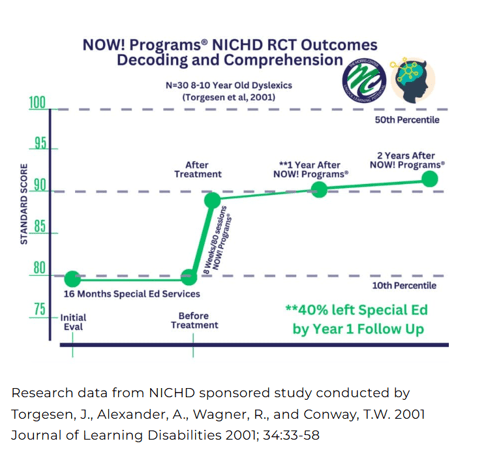
Figure 1 • NICHD Randomized Controlled Trial

Decoding and Comprehension Outcomes

Students receiving NOW! Foundations for Speech, Language, Reading, and Spelling® demonstrated substantial improvement in decoding and comprehension, with gains maintained through follow-up evaluation.

NICHD randomized controlled trial graph showing decoding and comprehension outcomes for NOW! Foundations for Speech, Language, Reading, and Spelling®
Source: Torgesen, J., Alexander, A., Wagner, R., & Conway, T.W. (2001). Journal of Learning Disabilities, 34, 33–58.

shutterstock_2286419993

 Selected Outcomes from Bowden (2022)

Data Source
The Effects of the Online Remediation of Phonological Processing Deficits on Functional Reading Abilities in Students With Dyslexia (2022)
Bowden, F. (2022). University of South Carolina doctoral dissertation.
The outcome data below are drawn from this mixed-methods intervention study examining students with dyslexia who received NOW! Foundations for Speech, Language, Reading and Spelling® through 60–65 hours of one-to-one online instruction. Standardized measures included the CTOPP-2 and WIAT-IV.

The selected results below summarize reported pre/post outcomes from the Bowden (2022) dissertation study and are intended as a snapshot of performance change on standardized measures.

CTOPP-2 Elision
Mean percentile gain: +28.6
Effect size: d = 1.8
CTOPP-2 Phonological Awareness Composite
Standard score: 84.2 → 102 (mean +17.8)
Effect size: d = 1.20
WIAT-IV Pseudoword Decoding
Standard score: 80 → 88.5 (mean +8.5)
Effect size: d = 0.71
WIAT-IV Reading Comprehension
Standard score: 86 → 92.3 (mean +6.3)
Effect size: d = 0.48
Source: Bowden, F. (2022). The Effects of the Online Remediation of Phonological Processing Deficits on Functional Reading Abilities in Students With Dyslexia. University of South Carolina doctoral dissertation. Selected outcomes shown here reflect reported standardized measure results from CTOPP-2 and WIAT-IV administrations.

tutoring student 6

Funding Considerations

Potential Funding Pathways for School Implementation


School systems may consider existing literacy intervention, special education, or targeted academic support funding streams depending on local program design and student populations.

Title I IDEA Dyslexia Intervention Budgets Academic Intervention Funds Scholarship or ESA Pathways Private Literacy Grants
Key Takeaway

The most effective literacy interventions are those that address the underlying language processes involved in reading development and demonstrate real improvements in student outcomes.

Students reading


On the challenge of translating research into measurable outcomes:

Frequently Asked Questions

Questions School and District Leaders Commonly Ask


These answers are designed for superintendents, curriculum leaders, special education teams, and district decision-makers evaluating structured literacy, dyslexia intervention, pilot implementation, and measurable student outcomes.

How is NOW! Programs® different from the literacy curriculum or intervention program we already use?
NOW! Programs® is not designed as a replacement for a district’s core literacy curriculum. It is a structured literacy and dyslexia intervention system designed for students who continue to struggle, including those who have not responded adequately to prior instruction or intervention. The model also differs operationally because instructors are trained, supervised, and supported through a managed instructional model designed to protect fidelity and reduce implementation variability.
Do schools need to replace their current curriculum to use NOW! Programs®?
No. NOW! Programs® can be evaluated and implemented as an intervention pathway alongside existing literacy instruction. For many districts, the relevant question is not whether Tier 1 instruction exists, but whether a subset of students with dyslexia, severe reading difficulty, or persistent nonresponse needs a different intervention model to produce measurable gains.
What students is this intervention designed for?
NOW! Programs® is designed for students with dyslexia, foundational reading deficits, and persistent literacy difficulties, including students who have not made sufficient progress through previous interventions. The system is especially relevant when districts are seeking a more intensive, structured literacy pathway for students whose needs extend beyond standard classroom support.
How does NOW! Programs® align with the Science of Reading and the five pillars of reading?
NOW! Programs® aligns with Science of Reading principles through an integrated structured literacy system. Foundations supports phonological awareness, phonics, and fluency, while Mental Imagery and Grammar & Writing strengthen vocabulary and comprehension through language-based instruction. The broader system is designed to address not only reading skills, but also the underlying language and cognitive processes that influence literacy development.
What evidence supports NOW! Programs®?
The NOW! Programs® research positioning on this site highlights NICHD-funded randomized controlled trial evidence supporting the instructional model. District leaders often evaluate this evidence not only for research credibility, but also for relevance to students with severe reading difficulty, measurable outcomes, and the practical question of whether a different intervention model should be considered when prior approaches have not produced adequate progress.
How does a pilot implementation work in a real school or district setting?
A pilot typically begins with a defined student cohort, baseline assessment, a clear implementation window, and agreed-upon progress monitoring measures. This allows school systems to evaluate student response, operational fit, instructional fidelity, and reporting needs before deciding whether broader expansion is warranted.
How are student outcomes measured?
NOW! Programs® generates structured student outcome data that can include growth in phonological awareness, sound-symbol correspondence, decoding accuracy, fluency, spelling, written language, and broader literacy performance. These data can support progress monitoring, cohort analysis, and system-level review within district decision-making processes.
How does this fit within MTSS or RTI frameworks?
NOW! Programs® can support MTSS or RTI decision-making by functioning as a more intensive intervention pathway for students requiring targeted support. The model can be evaluated through pilot implementation, structured progress monitoring, and shared reporting processes that help districts determine student response and next-step intervention planning.
What does implementation require from district or school staff?
One of the distinguishing features of NOW! Programs® is the managed instructional model. Instructors are employed, trained, and supervised through the NOW! Programs® system, which helps reduce local staffing burden, protects instructional fidelity, and allows schools to focus more directly on student identification, coordination, and outcome review.
How quickly do students show improvement?
Student response varies based on profile, severity, intervention history, and implementation conditions. Districts should evaluate progress through structured baseline data, ongoing monitoring, and clearly defined pilot goals rather than relying on broad assumptions. The important issue for many systems is whether measurable progress is visible early enough to guide decision-making and justify continued evaluation.
What happens if a pilot is successful?
If pilot outcomes are strong, districts can expand thoughtfully through additional student cohorts, additional schools, or broader integration within intervention frameworks. A phased model allows districts to use outcome data, implementation experience, and financial review to guide expansion decisions rather than committing to full-scale change without evidence from their own context.
Is there a district financial review available?
Yes. District leaders reviewing intervention decisions often want more than instructional information. They may also need a way to think through pilot investment, long-term service implications, and whether stronger student outcomes could change future cost exposure. A district financial brief can support that review.
What happens to students if effective intervention is delayed?
When students do not receive effective intervention early enough, districts may see continued reading failure, widening academic gaps, more intensive service needs, and more complex long-term educational decisions. For many leaders, the issue is not whether intervention exists in theory, but whether the current model is changing outcomes for students who remain stuck.

Key Terms in Structured Literacy and Dyslexia Intervention
Structured Literacy
Explicit, systematic literacy instruction that teaches foundational reading and language skills in a clear, cumulative sequence aligned with Science of Reading principles.
Speech-to-Print
An instructional approach that begins with spoken language and sound structure, then connects those language foundations to printed words, decoding, spelling, and reading.
Dyslexia Intervention
Targeted literacy intervention for students with dyslexia or dyslexia-like reading difficulties, often focused on phonological processing, decoding, fluency, spelling, and comprehension.
Phonological Processing
The ability to perceive, remember, and manipulate the sound structure of spoken language, which is foundational for decoding, spelling, and early reading development.
Tier 3 Intervention
Intensive, targeted support for students with significant academic difficulty who need more individualized or specialized intervention than standard classroom instruction or supplemental support provides.
MTSS / RTI
Multi-tiered systems used by schools to identify student need, deliver increasingly intensive support, and monitor progress in order to guide intervention decisions.
School System Partnership Inquiry

Begin an Institutional Evaluation


Ready to review the research evidence, implementation model, and pilot partnership opportunities? 

Executive briefing materials may include research documentation, implementation models, pilot partnership structures, and student outcome measurement frameworks.

NOW! Programs
📞 (352) 275-5778 • 🌐 nowprograms.com

© 2026 NOW! Programs® • Neuro-Development of Words®
Privacy Policy